

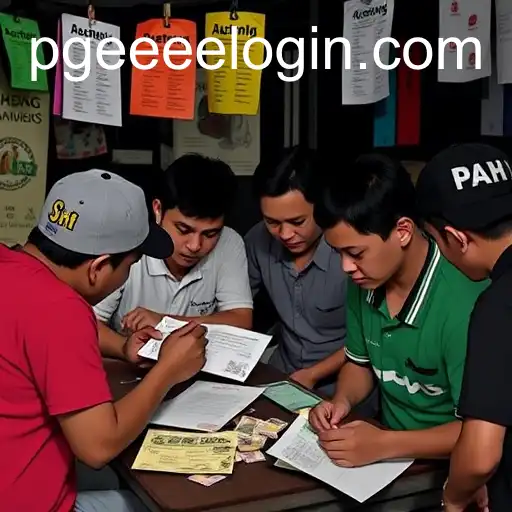

In the landscape of Southeast Asia, where a myriad of cultures converge, a unique and controversial practice emerges from the heart of the Philippines: Jueteng. This illegal lottery game, deeply rooted in Filipino society, continues to persist despite governmental and societal efforts to curb its influence. Jueteng carries a compelling narrative, offering a conundrum of socio-economic dynamics, cultural significance, and legal challenges. The essence of Jueteng goes beyond mere gambling; it is woven into the socio-economic fabric of many communities across the Philippines.
Jueteng is believed to have originated during the Spanish colonial era in the Philippines, initially introduced to the local populace by Chinese immigrants. The term "Jueteng" is derived from the Chinese words "hui" (to flower) and "teng" (a word meaning to choose), reflecting its original form as a lottery. Over time, Jueteng adopted attributes that resonated with the Filipino people, transforming into a game that not only entertains but also encompasses social interactions and community engagement.
The mechanics of Jueteng are deceptively simple yet cleverly structured to entice participants. Players choose a combination of two numbers, usually ranging from 1 to 37, similar to a small-scale lottery. Gamblers place bets on their chosen numbers, hoping their combination will be drawn, which typically occurs multiple times a day. The draws are frequently conducted with the aid of small balls, shaken in a ruffler, and drawn in a manner reminiscent of more formal lottery systems, giving it an air of legitimacy sought by its organizers. The cash prizes, although considerably smaller than those of official lotteries, provide immediate gratification and are often critically needed by its generally lower-income participants.
Jueteng's grip on Filipino society is grounded in its socio-economic context. It thrives predominantly in areas where poverty is widespread, offering a glimmer of hope through monetary rewards however uncertain they may be. In these communities, Jueteng provides not just an opportunity for financial gain but also employment—albeit illegally—for a network of individuals including bet collectors, coordinators, and operators. This network forms an intricate web supporting thousands who find themselves marginalized by the formal economy.
Analyses of Jueteng's impact indicate that it functions similarly to a regressive tax, disproportionately affecting those in lower income brackets. It fosters a cycle of dependence, where hope in a financial windfall overshadows more sustainable income-generating activities. This phenomenon illustrates the multifaceted challenge Jueteng presents to socio-economic development in the Philippines.
The government of the Philippines has enacted multiple regulations to counter Jueteng, seeking to absorb its market through sanctioned alternatives like the Small Town Lottery (STL). The STL, managed by the Philippine Charity Sweepstakes Office (PCSO), was designed to channel funds from illegal gaming into government-sanctioned systems, purportedly supporting charitable causes. Despite these efforts, cracking down on Jueteng has proven challenging.
Efforts to curb Jueteng are hindered by its deeply ingrained presence in society and the alleged involvement of some local officials and law enforcement in its proliferation. Accusations of corruption and collusion taint anti-Jueteng campaigns, often rendering them ineffective. The enduring presence of Jueteng illustrates not just a law enforcement issue but a broader social challenge demanding comprehensive and community-oriented solutions.
Beyond its socio-economic implications, Jueteng holds cultural significance, often viewed as a traditional pastime and social activity within communities. It fosters social ties, bonding participants who gather regularly to discuss numbers, strategies, and results. In this context, Jueteng is more than a financial pursuit; it’s a cultural phenomenon. This cultural embedment complicates eradication efforts, as many participants view it as an intrinsic part of their daily lives, not just a vice to be eliminated.
The path forward for addressing the complex reality of Jueteng involves a multifaceted approach. It requires more than stringent law enforcement; it involves tackling the root causes that sustain illegal gambling operations. Socio-economic reforms aimed at reducing poverty and providing alternative livelihood opportunities are crucial. Furthermore, fostering transparency and accountability in government and law enforcement can help rebuild trust and efficacy in anti-Jueteng efforts.
The discourse surrounding Jueteng is emblematic of the broader challenges faced by developing nations where illegal economies arise from gaps left by formal structures. Solving such issues goes beyond halting a game—it entails addressing deep-seated socio-economic grievances, enhancing governance, and nurturing societal change.

Discover the captivating world of Kingsman, a groundbreaking team strategy game that combines skill, strategy, and storytelling.

Dive into the thrilling world of OnePunchMan, an engaging game that combines action, strategy, and current trends.

Explore the captivating world of DoubleFly, a game that combines strategic gameplay with adrenaline-pumping action. Delve into the game's unique features and understand the rules that make it a standout choice for gamers.

Dive into the captivating world of WonderFarmBonusBuy, a game that blends innovative gameplay with riveting features, becoming a contemporary favorite.

Explore the fascinating world of GizaNights, an innovative game filled with mythical adventures and strategic gameplay, captivating gamers worldwide.

An exploration of the game Billionaire, its rules, mechanics, and how it relates to current economic trends.
